


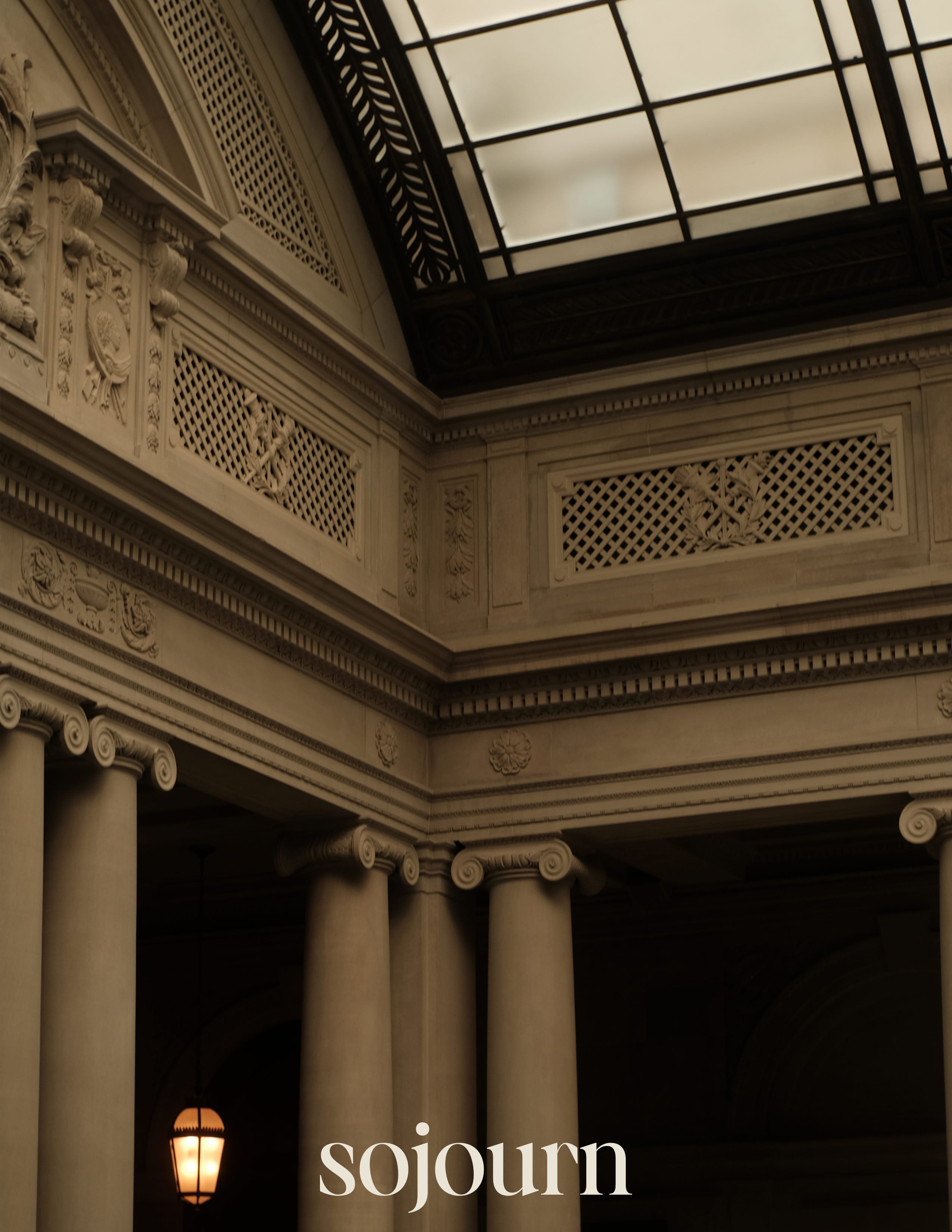
It’s not often that the interior of a museum rivals the art itself. Still, as you walk through each room of this Gilded Age mansion, it’s hard to look away from the intricate wood carvings in the crown molding, the authentic silk and damask drapery, and the custom-made passementerie crafted by historic European textile houses. The environment offers an intimate interaction with the artworks, a visual feast of master paintings and a masterclass in European decorative arts. This is The Frick Collection, the storied mansion-turned-museum on Fifth Avenue in New York City’s Upper East Side.
After a five-year closure, the Frick reopened its doors in Spring of 2025, unveiling a renovation that has already garnered multiple awards for its work in architectural preservation. Honoring the legacy of the original buildings, one of the city’s last great Gilded Age homes, alongside the art research library founded by Henry Frick’s daughter, the new architectural interventions by Selldorf Architects are complementary to its legacy, meticulous in the pursuit of authenticity with its expansion. The addition also includes the museum’s first-ever café, Westmoreland, designed by the AD100 interior design firm Bryan O’Sullivan Studio. The café is named after Westmoreland County in Pennsylvania, where the museum founder Henry Clay Frick was born, and which he also named his private train car.
As a nod to the museum’s picturesque viewing garden, and perhaps a garden reminiscent of one Fragonard’s imagining, as depicted in his monumental series “The Progress of Love” on view— a private, overgrown folie, on an aristocratic country estate in 18th-century France— Westmoreland is a Rococo reverie, realized. The entry foyer is a jewel box of a space, drenched in a lush mossy green, evoking the tones in the West Gallery of the museum and the background of the portrait of Hans Holbein’s Portrait of Sir Thomas More, and fully enveloped in a mural by the artist Darren Waterston.


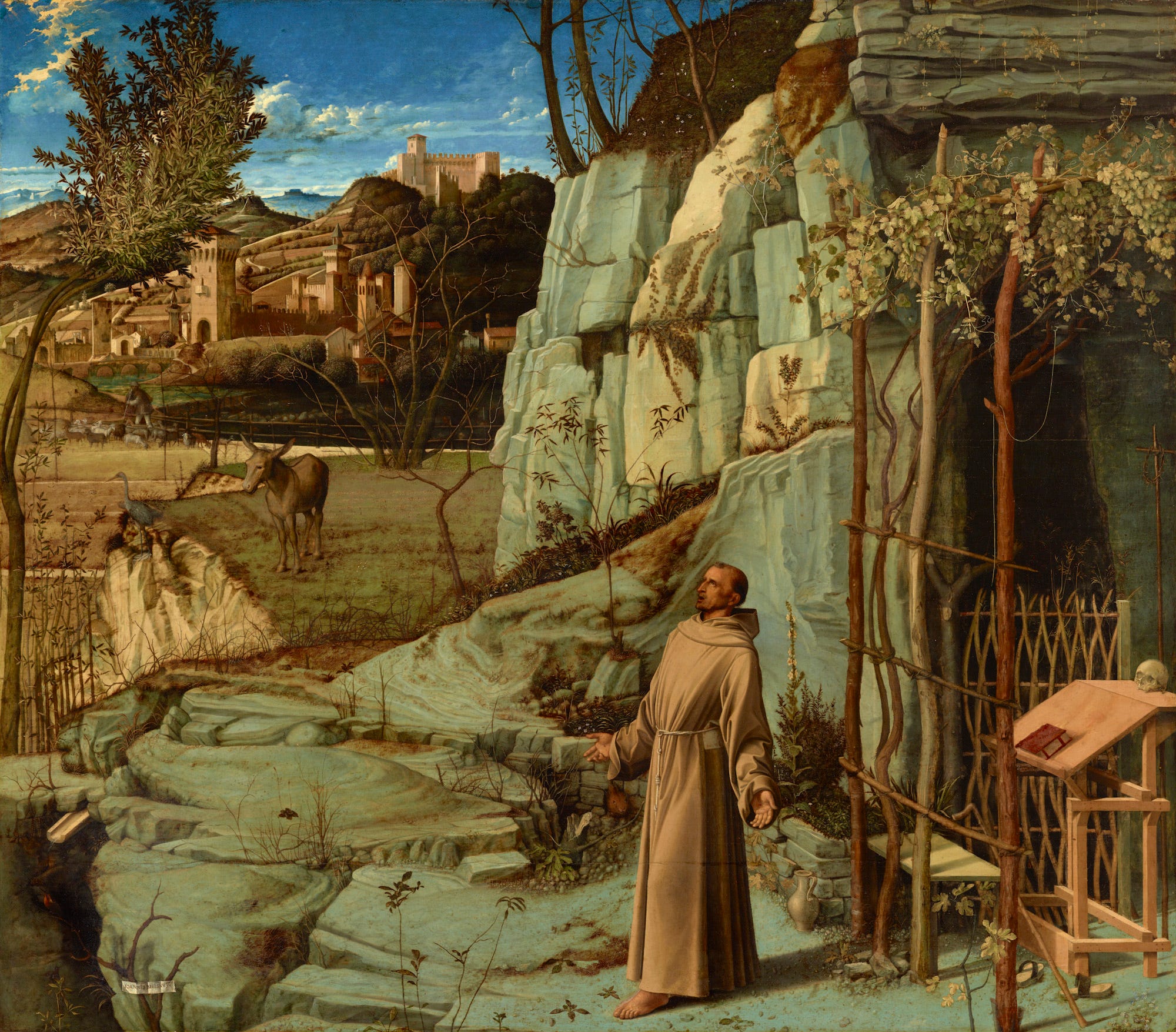
Waterston, a New York-based painter known for his ethereal, immersive installations, came to New York City for the first time at 19 to visit the Frick. In his first college art history class, he became enamored with Giovanni Bellini’s Saint Francis in the Desert and felt called to see it in person. This awe-inspiring moment solidified his path as an artist, and he’s visited the Frick every year of his life since.
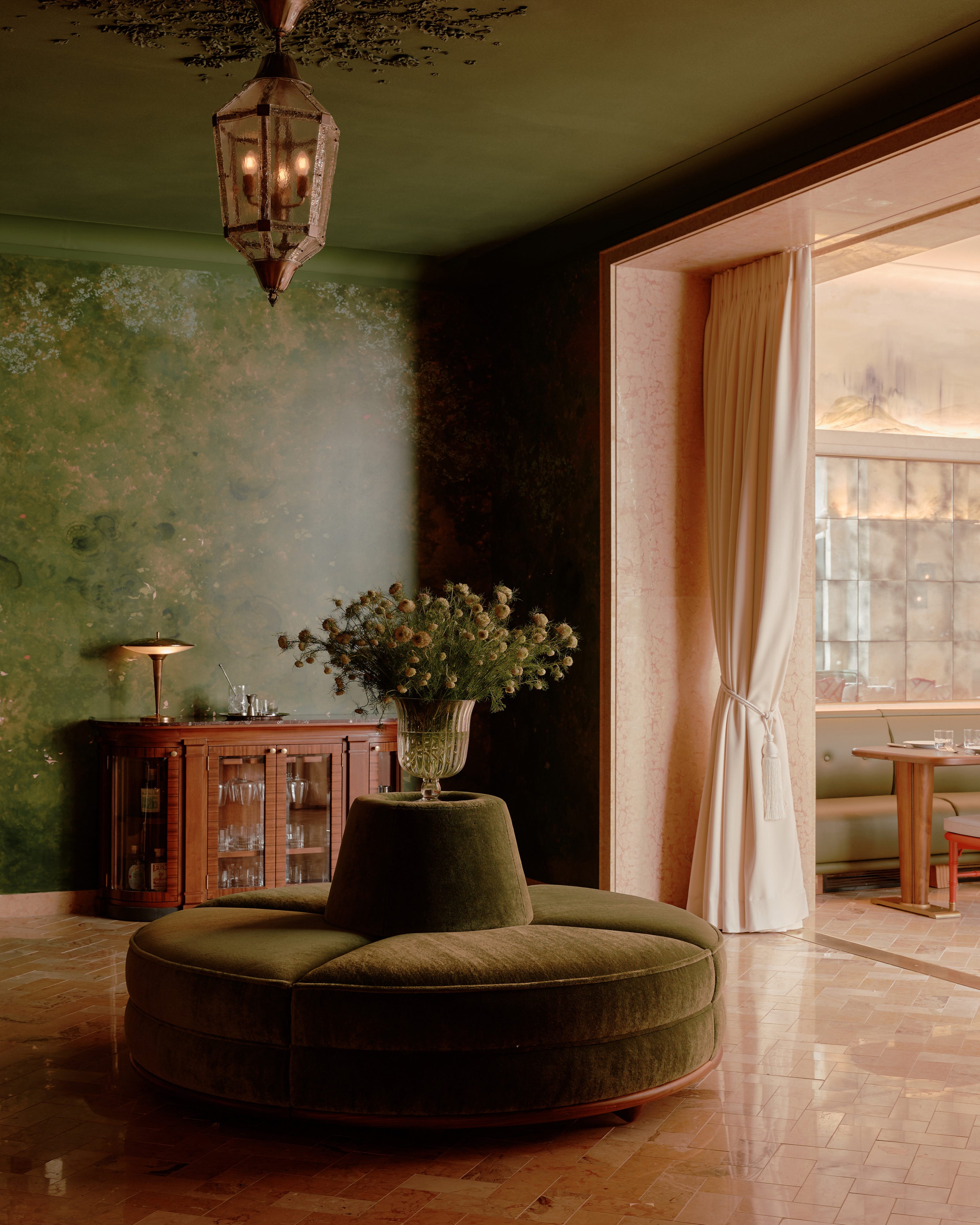
Who better than Waterston himself to draw inspiration from the works of the Frick and translate them into a living, breathing space? In the entry foyer, the mural is layered with musicality and movement, the walls becoming a “conversation with the collection”, as Wasterston intended. The natural light that enters the space in the afternoon was considered part of the process, a detail captured in the dappling of the paint.
Waterston was also commissioned to paint the frieze mural around the restaurant’s main dining area, which he approached like a fresco. It is intended to be experienced cinematically, as a passing landscape seen through the windows of a train car. But it is also highly fictive, not quite based in reality, a method that draws from “The Netherlands and Northern Renaissance painters, who would build the imagined landscape”, as the scenes they depicted had irrational parts, as well as traditional Japanese scroll painting and screens and their distorted pictorals.
Waterston’s artistic vision is also present in the design of the plaster reliefs on the ceiling from which Selldorf’s Seguso pendants hang. Based on the medallions typical to a Gilded Age home, they are deconstructed into an abstract botanical motif, vines that seem to be growing across the ceiling.
Central to the foyer is a striking Borne sette, wearing a mossy green mohair, a perfect perch from which to admire the restaurant while waiting for your table. Bryan O’Sullivan Studio designed this piece to establish a historically accurate design language that begins with the first piece you interact with in the space. Borne settees were typical of Gilded Age homes in New York, serving as a place for private conversation and a central vantage point from which to view a room. Adam Palmer, the lead bespoke furniture designer for the café, shared the intention behind the sette.
“We wanted to design something which helped to give the space its own identity, rather than feeling like a passageway or waiting hall. We intentionally designed the borne to feel soft, comfortable, parlour-like and to create an experience before you enter through the curtains into the main dining room.”
As you enter the main dining space, the palette shifts to soft pastels, which Bryan O’Sullivan pulled from Selldorf’s established marble selection, a stunning Breccia Aurora, laid in a herringbone pattern across the floor; the colors are reminiscent of the pink hues that might be seen in the fashions of a Fragonard subject.
The design takes cues from interior designer Elsie De Wolfe, widely credited with inventing the modern profession of interior design, who designed several rooms on the second floor of the Frick mansion. Born in New York City in 1859, Elsie ushered in a new era of interiors, preferring lighter schemes than what was common in Victorian times. Her designs leaned bright, soft, and feminine and featured mirrors that expanded space, all elements whose presence can be felt in the light-filled main dining space of Westmoreland. Wolfe indulged her taste for Chinoiserie, wicker, and trelliswork motifs, elements reminiscent of gardens.
"I opened the doors and windows of America, and let the air and sunshine in."
- Elsie De Wolfe
Bryan O’Sullivan studio studied Wolfe’s design of the Trellis room in The Colony Club, a premier women’s social club, her first major professional commission. The space created an illusion of an outdoor garden pavilion with painted latticework, caning and bamboo. This was the inspiration for the bamboo dining chairs in Westmoreland— the bespoke design melding elements of a classic English ‘Chippendale’ style chair with elements of French Chinoiserie: the Western imitation and interpretation of East Asian design that was widely popular in the 18th century.
The museum itself reflects this Western fascination with Eastern design, featuring a collection of authentic Chinese export porcelain modified with French gilded mounts, alongside indigenous French Sèvres porcelain that imitated Chinese designs. The chairs’ signature red paint references multiple works in the Frick, from the red robes of the cherubs in de Wolfe’s designed Boucher Room to the cloaked monkeys in Twachtman’s chinoiserie mural.


The level of detail Bryan O'Sullivan uses to craft a visual narrative may be best reflected in the floral motif woven throughout the space. From the bar surround to the wood carvings on the dining tables and the entry table lamp, the subtle emblem represents an abstract "burnet," a perennial that grows in the adjacent garden.
“The aim was to create a repeating motif that felt decorative and referential to classical carved furniture detailing, whilst feeling like a modern interpretation. That’s a key element of Westmoreland - we wanted to design pieces that felt like they honour the origins of the museum, but didn’t feel like actual antiques or an exact reproduction.”
- Adam Palmer, Lead Furniture Designer


A visit to Westmoreland could include a post-museum lunch (reservations are made day-of when you visit the museum), featuring the Chicken Milanese or Sweet Corn Risotto, paired with one of their art-inspired cocktails, such as the Toreador, made with tequila, apricot brandy, and fresh lime juice. Curator Aimee Ng paired its historic tie to Spanish culture with Édouard Manet’s The Bullfight. Skyllar Hughes, a culinary veteran of Ci Siamo, helms the kitchen.
The café also features a classic British-style high tea, adding to the Gilded Age elegance. Served daily beginning at 1:00 PM, the afternoon tea is $70 per person and includes signature teas, traditional finger sandwiches, and house-made pastries.
Whatever your meal of choice, a visit to Westmoreland is a New York City must—a café worthy of one of the world’s most legendary art institutions, where you can dine inside a work of art.
“To me, art begets art. Painting feeds the eye just as poetry feeds the ear, which is to say that both feed the soul.” - Susan Vreeland


Upcoming Events at the Frick:
Louis Vuitton First Fridays: Free event with after-hours gallery access, special exhibitions, live music in the Garden Court, museum talks, and drinks. 5:30-9:00PM on the first Friday of each month, returning on October 2.
Concert Series: This November, the Frick will be hosting two evening concerts on the 14th and the 22nd, featuring pop-up performances in the Garden Court ahead of the main event- free with museum admission. (The concerts are already sold out for the season, but the pop-up shows are first-come, first-served!) The performances will be directly related to the fall exhibition, Siena: The Art of Bronze, 1450–1500 (October 15, 2026 – January 18, 2027): the perfect auditory complement for a fully immersive experience.