


Mallorca is an island of contrasts. Little seaside fisherman’s villages and traditional mountain towns with rustic fincas overlook sweeping Mediterranean views and the luxury and pomp of Palma. The largest of the Baeleric islands has an undeniable artistic spirit and the kind of natural beauty that makes you question why you don’t spend every summer here. Its vibrant culture thrums with energy in the city beach towns, while the seemingly infinite olive groves and vineyards of the countryside invite you to experience the Mallorcan way of slow living- the rhythms of daily life that unfold at a deliberate pace: long lunches, late dinners, languid dips in the ocean and siesta in the afternoons.
MALLORCA ITINERARY
PART ONE - SES SALINES & SANTANYI
TO STAY:
Built in the 17th century, this traditional Mallorcan home and farmhouse was reimagined as a five-star boutique hotel, one where rustic minimalism and restrained luxury reign supreme. Rugged textures- golden sandstone walls and chalky white stucco- are bathed in swaths of natural light, replaced at night by the warm glow of Santa & Cole lamps. The hotel is situated in the center of the small town of Santanyí, looking out over it’s clay-tiled rooftops and terraces. Though it’s only a 10-15 minute drive from the ocean, you’ll be hard pressed to pull yourself away from the secluded property, boasting an impressive collection of contemporary Spanish art, it’s destination fine dining restaurant, Orce, and the tranquil Sa Calma spa.


Average €475 per night.
Hotel Ca’n Bonico: A similar vibe to Can Ferrereta, but at a fraction of the cost. In Ses Salines, an even more quiet village than the neighboring Santanyí, you experience the real local side of Mallorca. This beautifully restored 13th century manor house is surrounded by expansive landscaped grounds full of citrus and olive trees, with a garden-side pool and shady veranda at its center. The rooms are large and comfortable, modern in their amenties, yet leave the historic elements on full display- stone pillars, exposed beams and vaulted ceilings.


Average €195 per night.
DAY ONE:
Arrive in Palma, pick up your rental car, drive to Ses Salines/Santanyí, check in
Lunch: Casa Manolo, Ses Salines
Walk around local boutiques in Santanyí, dip in the hotel pool before dinner
Dinner: Laudat, Santanyí
DAY TWO:
Grab coffee & explore the the Santanyí market, pick up snacks for the beach
Brunch: Xaloc, Cala D’or
Beaches: Cala S’almunia (sunbathing on the rocks and swimming), Caló des Moro (little beach path, snack and more swimming)
Wine & Tapas: La Bodega Mallorca, Cala D’or
Dinner: Manique, Santanyí
Night cap: Sa Cova Bar, Santanyí
DAY THREE/PART TWO - PALMA & DEIA:
Breakfast: Ocre (at your hotel, Can Ferrereta before checking out)
Drive to Palma, visit Fundació Miró Mallorca
Lunch at the Beach Club Gran Folies (alternatively, if you stay in Palma for part of your trip, spend an entire day into evening at this beach club for a full sunbed experience, followed by a sunset dinner and DJ set)
Drive to Valldemossa
Visit the Chopin Museum, take a scenic walk around the village
Drive to Deia, check into your hotel
Dinner: El Olivo at sunset
TO STAY:
La Residencia Belmond Deia: Arguably the most famous and iconic hotel in Mallorca, the Belmond sits among the olive-clad cliffs of the Tramuntana mountains, blending two historic 16th-century stone manors into the ultimate luxury escape. A splurge hotel for a special occasion where sun-drenched rustic charm fills every corner and guests are invited to enjoy multiple panoramic pools. The terraces of the famed restaurant, El Olivo, just might be the most romantic spot for dinner you’ve seen in your life.


Average €1,215 per night.
Es Molí: On a dramatic terraced hillside surrounded by lush botanical gardens, this boutique hotel is classic, authentic Mallorca. More approachable than the Belmond, without sacrificing on amenities or style. Guests can enjoy the spring-fed pool with sweeping views of Deià and the Mediterranean Sea, along with an Al Fresco massage by the pool or on the shaded terraces. Es Molí also boasts a private beach club, Sa Muleta, a secluded rocky cove with a guest-only shuttle, perfect for sunbathing.


Average €398 per night.
DAY FOUR:
Breakfast: Sa Font Fresca
Visit Gres Gallery and shop at Datura Studio Isla
Hike to Cala Deia
Lunch: Ca’s Patró March or Ca’n Lluc on the beach
Spa treatment at La Residencia or Es Molí
Dinner: Sebastián
Night cap: Sa Fonda
DAY FIVE:
Breakfast: Café Miró
Drive back to Palma
Coffee: Sāntal Cafe
Stroll old town Casco Antiguo, see Catedral-Basílica de Santa María De Mallorca
Visit Es Baluard Museu d’art Modern I Contemporani
Lunch: Mercat de Santa Catalina (walk around market sample oysters and tapas)
Glass of wine at Enoteca sa Roteta (in Mercat de Santa Catalina) or Bar La Sang
Adiós!

I was drawn to the hushed magic of Mallorca’s smallest corners: the hidden calas with water so crystal-clear you’ll think its a hallucination, the hilltop stone villages that transport you back to a simpler time, quiet in their preserved primitivity, the museums that house the works of 19th and 20th century creatives, the art depicting the intangible, wild beauty of the surrounding landscapes. I further indulged my love for Spanish food, particularly Catalan cuisine, Mar i Muntanya, sea and mountains, dishes that blend the coastal and agrarian culture, salted cod and grouper, cured sausages- heavy on the garlic and olive oil and always finished off with sweet and tangy citrus from the island’s abundance of citrus groves.


Visiting in the summer inherently meant that my trip would begin with a beeline straight to the ocean, where I stayed in the small town of Ses Salinas in the southeast corner of the island. Here you’re invited to experience authentic, rural Mallorca, where the small town life moves around you away from throngs of tourists, an arms reach from the quintessential Mallorcan beaches. At the Boutique Hotel Ca’n Bonico, you’re instantly treated like a resident, welcomed home and shown to your suite with a private terrace or balcony as you make your way through citrus and olive trees. At the heart of the property, the swimming pool is Mallorcan bliss, the village church’s belltower and the colors of Spanish sunsets as the backdrop. As I wandered out to the pool after getting settled, the server at the poolside bar checked in on me and was quick to offer recommendations, his favorite spots as a local born and raised in Ses Salines. He grabbed a napkin off the bar and scribbled down Casa Manolo, a culinary hidden gem with some of the best tapas and seafood on the island. Sitting al fresco and eating fish caught at the nearby port was the perfect first taste of Mallorca.
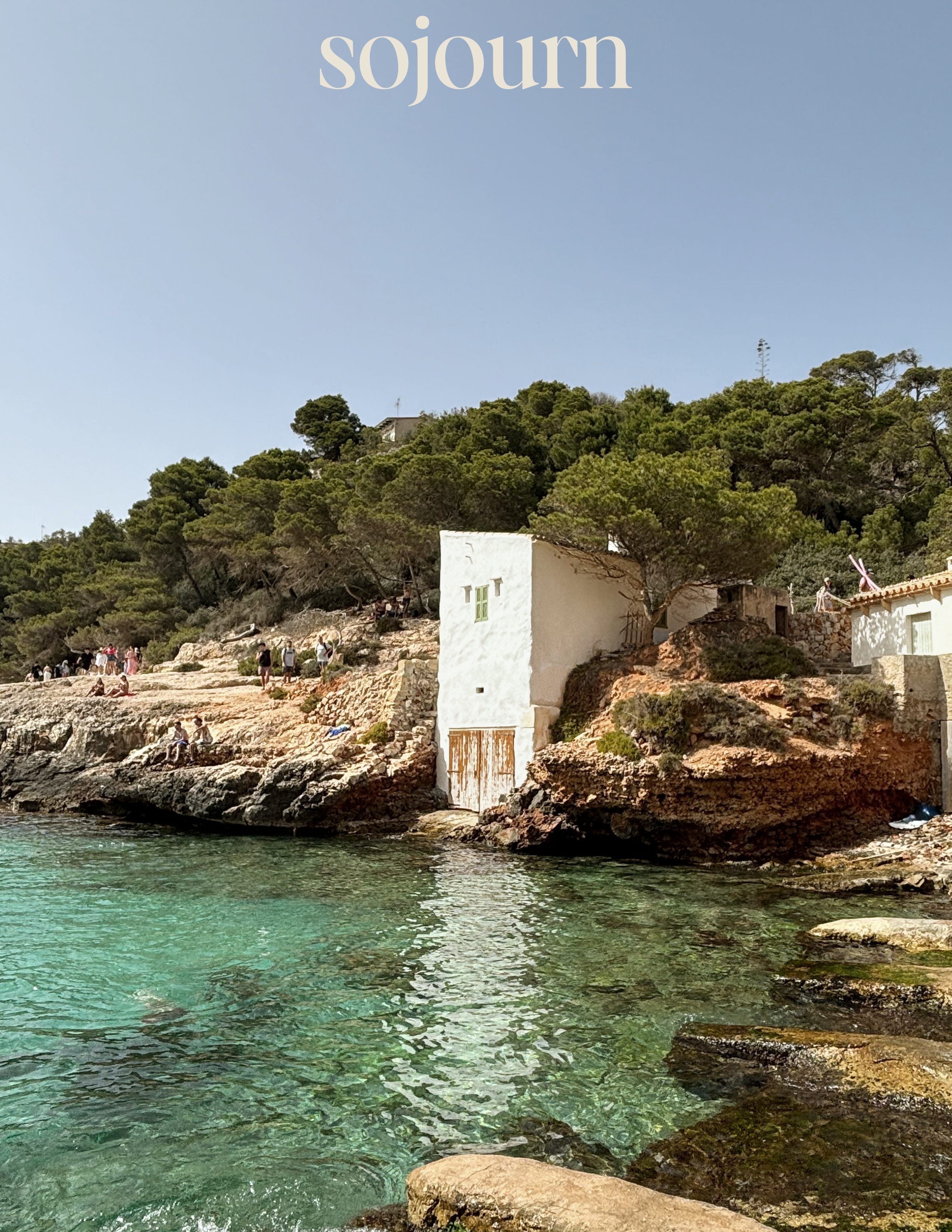
A day well spent in the southeast corner of the island begins with the market in the nearby town of Santanyí, a larger village and another beautiful vantage point to base yourself. Every Wednesday and Saturday morning, locals from all over the island peruse the outdoor market stalls, colorful tents lined up in the cobblestone squares with endless rows of vendors selling woven beach cover-ups, handmade ceramics, and local delicacies to sample and take along for beach hopping the many calas. I spent an entire day between Cala S’almunia and Caló Des Moro, where you hike the steps and oceanside bluffs, heavy with the scent of jasmine and sprawls of bougainvillea down to the sand or perch up on a flat section of the rocks to sunbathe, jumping into the pure turquoise water on repeat to cool off. At Cala S’almunia, traditional fishing huts made of limestone are built into the cliffsides, looking across at the majestic rock formations and verdant mountainsides. There, floating in the Mediterranean in awe, I tried to pause the moment, becoming nostalgic for it while it was still happening. Something about these secluded coves felt like a privilege to experience, that I had found a rare and special corner of the world.


To understand the diversity of Mallorca’s landscape and its artistic draw, you head west to Palma and the medieval mountaintop villages of Valdemossa and Deià. Just outside of Palma, stop and visit Fundació Miró, a museum that honors the work of the Catalan painter, sculptor and ceramist Joan Miró, an instrumental figure in the Surrealist movement known for his playful and symbolic work and bold use of color. This is not just a gallery— but Miró’s actual working space where he spent the last 30 years of his life, a place full of his spirit and surrounded by nature and light, just as he intended. Stop for lunch at at Beach Club Gran Folies, the impossibly chic restaurant perched on the cliffs of Cala Llamp. Dine on fresh seafood while looking out over the straw-thatched umbrellas and their signature cliffside swimming pool carved directly into the rocks.
From here, venture off to the Tramuntana Mountains (a UNESCO World Heritage Site) where hairpin turns and elevation change are rewarded with the most incredible views and landscape on the island. Strolling the charming cobblestone streets of Valldemossa and Deià, it becomes clear why they have been a magnet for artists both old and new, the peaceful surroundings become the perfect canvas for quiet contemplation, a retreat for the creative mind so palpable I was inspired by every corner. Visit the Chopin museum in Valldemossa, where he composed several famous pieces, and Gres Gallery in Deià, where Dora Good’s ceramics are intermingled with vintage furniture in a gallery space connected to her studio. The chunky surfaces and patterns of her pieces are informed by the landscape and the free-thinking creative spirit of Deia where she came every summer as a child.
A visit to Deià should include a visit to the Belmond, whether that’s splurging on a stay or dining on the terrace on El Olivo, situated in a beautifully restored 16th‑century olive press at the heart of the property. In classic Belmond style, the resort is housed in two meticulously preserved sixteenth-century manor houses and boasts three pools, a spa, and an in-house art gallery. Head to happy hour at El Olivio at sunset and sample the largest and best olives of your life with a spritz before dining on the Michelin-star tasting menu helmed by Chef Guillermo Méndez.


Before leaving Mallorca, I spent a day in Palma soaking up the rich history and heart of the island. I sipped my cappuccino at Santal, a coffee shop housed inside a 15th-century windmill, and wandered through the vibrant old town of Palma, down narrow winding alleys with colorful buildings and sidewalk cafes on every corner. I stopped to see the monumental Catedral-Basílica De Santa María De Mallorca, where inside you can witness the magnificence of Gaudi, who seamlessly designed the additions to the centuries old Gothic church. I lunched like a local at Mercat De Santa Catalina, savoring my last few tapas and fresh oysters amongst stalls of fresh seafood and cured meats, the marketplace bustling with locals shopping for groceries and friends laughing animatedly over a bottle of wine. A glass at Enoteca Sa Roteta, which specializes in wine made from the local Mallorcan vineyards, is how I kiss Mallorca goodbye.
xx, Jess