


Where you choose to stay when you travel should never be an afterthought. Where you rest your head each night and have your coffee every morning sets the tone for your entire vacation. For us, that means the right neighborhood, a concierge who guides you to the spots where locals actually hang out, and rooms layered with details that help you piece together the story of the place.
There’s a time and an occasion for a five-star splurge at a Belmond or an Aman. We love a luxury hotel brand as much as anyone else. But after a decade of working in hospitality interior design, I’ve seen how hard it can be for a large hotel chain to give you a real sense of where you are.
Even before I worked in the industry, I was drawn to smaller hotels. I’d take quaint over 300 room keys and an overcrowded pool any day. I’m not the kind of traveler that prioritizes dining at the hotel every night and I rarely order room service. I’d rather be out discovering another beloved hidden gem. I gravitate toward intimate spaces, towards hotels and restaurants that are locally owned and run.


Why Chain Hotels Lose Their Sense of Place
I’ve seen designs for hotels begin with the best intentions. Plans to source local materials, draw on the history and culture of the neighborhood, and feature the works of local artists. Then, somewhere between concept and opening day, the hotel loses its quirks and personality.
Large hotel groups give designers a set of strict brand standards that must be adhered to. By the time those standards are met and the budget is settled, the vision for a distinctive new hotel can end up looking like the latest version of the Hilton blueprint.
That’s not to say that some brand portfolios don’t make the effort for local collaborations. Working with brands like 1 Hotel, I’ve seen some beautiful design features survive the budget cuts. But they’re often among the first details to be value-engineered out.
When a project goes over budget, the handcrafted tile from a local artisan will be swapped for a cheaper, mass-produced alternative. Finishes, furniture, and lighting often absorb a disproportionate share of the cuts because those decisions come later, after much of the architecture has already been approved.
A Case for the Boutique Hotel.


Of course, “boutique” can cover a lot of ground, including the two-star place that turns out to be practically a motel. (Always read the reviews!!!) But the best of them have something very special, the kind of thing you can’t replicate.
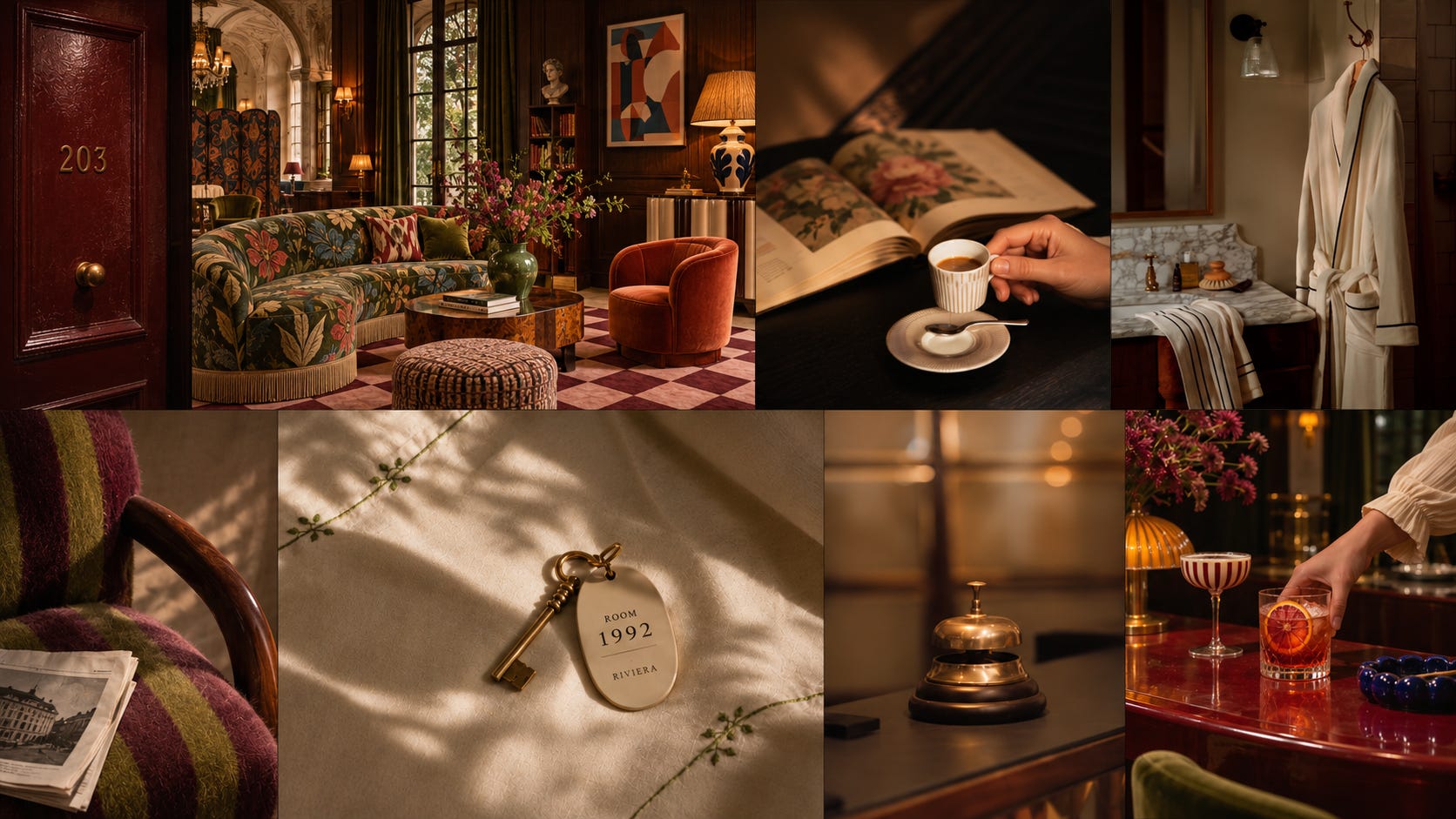
You can see it in the details— A piece of vintage furniture found nearby. A corridor filled with paintings by a local artist. An object that’s been in the owner’s family for generations. The monogrammed bathrobes stitched with a name that is only their own. These are the things I remember long after checkout.
Here at sojourn, we seek out those authentic experiences to share with you. sojourn is defined as a temporary stay that has a lasting impact; an immersion into a culture and place that is not your own. The kind of trip that stays with you, that lingers on and can be triggered by a memory of the senses.


We look for beautiful hotels with excellent service that offer a more local perspective. And we bring that same eye to the restaurants, cafés, and bars we recommend, straying away from chains and looking for spots that feel like a natural extension of the neighborhood. Places that are rooted firmly in authenticity, shaped by the area rather than instrusive to it. The best hotels are not places that could be anywhere, spread across various locations on the globe. They are places that can only be exactly where they are.